10 Ways AI Is Changing Everyday Life in 2026
Artificial Intelligence (AI) is no longer a futuristic concept found only in science fiction movies. In 2026, AI has become a part of everyday life, helping people work more efficiently, learn faster, stay organized, and make better decisions. Whether you realize it or not, you probably interact with AI multiple times every day.
From smartphones and search engines to online shopping and healthcare, AI is transforming how we live and work. Let’s explore ten ways AI is changing everyday life in 2026.
1. Smarter Personal Assistants
Virtual assistants have become more intelligent and useful than ever before. Modern AI assistants can manage schedules, summarize emails, answer questions, create reminders, and even help with research.
Instead of simply responding to commands, today’s AI assistants can understand context and provide more personalized support. This allows users to save time and focus on more important tasks.
2. Improved Online Search
Search engines are becoming more conversational thanks to AI. Instead of typing short keywords, users can ask complete questions and receive direct, relevant answers.
AI-powered search tools can summarize information from multiple sources, helping people find what they need faster without spending hours browsing through websites.
3. Personalized Learning for Students
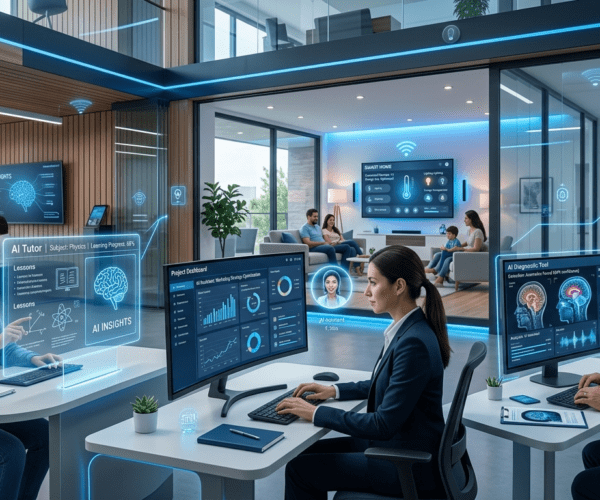
Education is one of the areas benefiting most from AI. Students can now access AI-powered tutoring systems that provide personalized lessons based on their learning style and progress.
These tools help explain difficult concepts, generate practice questions, and offer instant feedback, making learning more accessible and effective.
4. Better Healthcare Support
AI is helping healthcare professionals improve patient care and efficiency. While AI does not replace doctors, it assists with tasks such as analyzing medical images, identifying patterns, and supporting diagnosis.
Patients also benefit from AI-powered health applications that monitor fitness, track symptoms, and provide wellness recommendations.
5. Enhanced Cybersecurity
As cyber threats continue to evolve, AI plays an important role in protecting users and organizations. AI systems can detect unusual activity, identify potential threats, and respond to attacks faster than traditional methods.
This helps reduce risks associated with phishing, malware, and other online threats.
6. More Efficient Online Shopping
AI is changing the way people shop online. E-commerce platforms use AI to recommend products based on browsing history, preferences, and previous purchases.
These personalized recommendations help shoppers discover products that match their interests while improving the overall shopping experience.
7. Smarter Homes and Connected Devices
Smart home technology continues to grow in popularity. AI-powered devices can adjust lighting, control temperatures, manage security systems, and automate routine tasks.
By learning user preferences, these devices create a more comfortable and energy-efficient living environment.
8. Increased Workplace Productivity
Businesses of all sizes are using AI to improve productivity. AI tools can automate repetitive tasks, summarize meetings, generate reports, and assist with content creation.
Employees spend less time on routine work and more time focusing on creativity, problem-solving, and strategic decision-making.
9. Improved Content Creation
Content creators, marketers, and businesses are increasingly using AI to assist with writing, video editing, graphic design, and content planning.
AI tools help generate ideas, improve workflows, and speed up production while allowing creators to focus on delivering value to their audiences.
10. Smarter Transportation and Navigation
AI continues to improve transportation systems through smarter navigation, traffic management, and route optimization.
Navigation apps use AI to analyze traffic conditions in real time, helping drivers choose faster routes and reduce travel time. AI also plays a growing role in vehicle safety systems and transportation planning.
Benefits of AI in Everyday Life
The growing use of AI offers several advantages:
- Increased efficiency and productivity
- Faster access to information
- Improved personalization
- Better decision-making support
- Enhanced convenience
- Stronger cybersecurity protection
These benefits help individuals and organizations accomplish more with fewer resources.
Challenges and Considerations
Despite its advantages, AI also presents challenges that society must address.
Some concerns include:
- Data privacy and security
- Ethical use of AI
- Potential job displacement
- Misinformation generated by AI systems
- Dependence on automated technologies
Responsible development and use of AI will remain important as adoption continues to grow.
Conclusion
Artificial Intelligence is becoming an essential part of daily life in 2026. From education and healthcare to cybersecurity and productivity, AI is helping people work smarter, learn faster, and solve problems more efficiently.
As technology continues to evolve, understanding how AI affects everyday life will become increasingly important. By embracing its benefits while addressing its challenges, individuals and businesses can make the most of the opportunities AI provides.
Frequently Asked Questions
What is AI?
Artificial Intelligence refers to computer systems that can perform tasks that normally require human intelligence, such as learning, reasoning, and problem-solving.
Is AI replacing human jobs?
AI is automating some tasks, but it is also creating new opportunities and changing how people work rather than completely replacing human workers.
How can beginners start using AI?
Beginners can start by using AI-powered tools for writing assistance, learning, productivity, search, and personal organization.
Will AI continue to grow in the future?
Yes. AI adoption is expected to continue expanding across industries, creating new applications and opportunities in the years ahead.